
The Redstone Wars: How Shari Outlasted Her Father and Sold the Empire He Built
Sumner Redstone built an empire out of spite. He started with a New England drive-in theater chain his father left him and turned it — through hostile acquisitions, volcanic temper, and an almost deranged belief in his own judgment — into one of the most powerful media companies in American history. MTV. Nickelodeon. BET. Comedy Central. Paramount Pictures. Showtime. CBS. At its height, the Redstone empire touched nearly every screen in America. Then his body started failing, his mind started softening, and the people he'd spent decades fighting — above all, his daughter Shari — were still standing. The gladiator had become the spectacle.
The empire Sumner built
Sumner Redstone inherited National Amusements, a modest chain of drive-in theaters scattered across New England, from his father. That was the foundation. Everything else he built through force.
Viacom fell first. Then CBS. He assembled a roster that, at its peak, commanded cable television, Hollywood film production, broadcast news, and every music video ever played at a house party between 1985 and 2005. The combined empire spanned MTV, BET, Comedy Central, Nickelodeon, Paramount Pictures, CBS, and Showtime. It was worth tens of billions and touched an audience of hundreds of millions.
The mechanism holding it all together was National Amusements — the family holding company that controlled voting rights in both Viacom and CBS. Whoever controlled National Amusements controlled everything. Sumner understood this completely. He structured it that way on purpose.
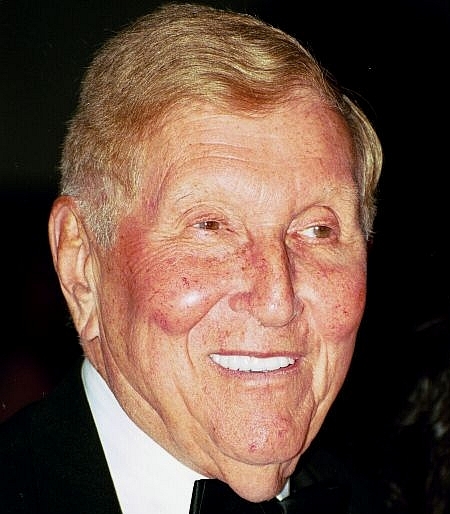
Sumner Redstone at the height of his power, when Viacom's empire stretched from MTV to Paramount Pictures (Photo: John Mathew Smith / Wikimedia Commons, CC BY-SA 2.0)
Father against daughter, for decades
Shari Redstone entered the family business in 1994. Her father had recruited her. That detail matters: he opened the door. Then he spent years trying to close it again.
Sumner called her derogatory names in public. He tried to buy out her shares. He told reporters and rivals alike that she was unqualified to run what he had built. When the media started positioning Shari as his heir apparent, his response was not paternal pride. It was hostility. The crown he'd spent a lifetime assembling was the one thing he was not willing to hand over — especially to the people he loved.
Shari was not the only Redstone casualty. Brent, Sumner's son, sued his father and sister for being systematically frozen out of the family business. That lawsuit ended with Brent walking away with an estimated $250 million and zero presence in the empire. Two children, one bought out and one in open warfare — and Sumner was the common denominator in both situations.
When the women in the mansion became the story
In his final years, Sumner Redstone's personal life stopped being a sideshow and became the main event.
In 2015, Sumner evicted former companion Manuela Herzer from his Los Angeles mansion and stripped her of the healthcare power of attorney she had held. Herzer's response was to sue, challenging whether Sumner was mentally competent enough to make that decision in the first place. The court dismissed the challenge, but the proceedings were ugly — a public examination of the aging billionaire's cognitive state, his relationships, and the chaos surrounding his daily life. Another former companion, Sydney Holland, was drawn into the proceedings alongside Herzer. Sumner later turned the tables, suing both Herzer and Holland for elder financial abuse and fraud.
The legal maneuvering around Sumner's mind and mansion was, in retrospect, a preview of what was coming in the boardroom.
Les Moonves tries to defuse the bomb and gets blown up instead
The biggest corporate battle of the Redstone saga arrived in May 2018. CBS CEO Les Moonves and the network's board made a bold, aggressive move: they sued Shari Redstone and National Amusements, seeking to dilute the Redstone family's voting power from roughly 80 percent down to approximately 17 percent.
The argument was that the Redstones were pushing a CBS-Viacom merger that served their own interests, not CBS shareholders'. National Amusements counter-sued immediately, accusing CBS of engineering a corporate coup designed to sideline Shari entirely. The two sides were locked in direct legal combat over control of one of America's most valuable broadcasting empires.
Then came the escape hatch. Les Moonves was fired in 2018 amid #MeToo allegations. The boardroom battle — which had been heading toward a protracted legal war — resolved itself in Shari's favor. The external threat to her control collapsed.
By August 2019, Shari had engineered the CBS-Viacom merger. The combined company was called ViacomCBS, later rebranded as Paramount Global. Shari Redstone installed herself as non-executive chairwoman. After decades of being told she was unqualified, she now sat at the head of the table.
The empire rots on the vine
Winning the family war did not solve the business problem.
The combined Paramount Global was a legacy media company in an era that was not kind to legacy media. Streaming had eviscerated the cable bundle. Netflix, Disney+, and Amazon were in a different stratosphere. Paramount+, the company's own streaming service, was burning cash without gaining the kind of subscriber base that justified the spend. The debt load was heavy. The brands were famous but the financials were grinding.
Sumner Redstone died in August 2020 at age 97. His net worth at death was approximately $4.5 billion — a fraction of what the empire should have been worth had it navigated the digital transition more successfully. He had spent so much energy fighting over control of the company that the company itself had been left behind.
Shari was now the sole controlling force in a business that needed rescuing.

The Paramount Pictures lot in Hollywood — one of the most iconic addresses in the entertainment industry, and ultimately a Skydance asset (Photo: Laura Alier / Wikimedia Commons, CC BY 4.0)
Trump, 60 Minutes, and a $16 million exit toll
The final act of the Redstone saga had a cast no one could have predicted.
In late 2024, with Shari already deep in negotiations to sell the company to Skydance Media, Donald Trump sued Paramount over CBS News's 60 Minutes broadcast of a Kamala Harris interview. Trump's allegation: that CBS had edited the interview in a way that made Harris's answers appear more coherent and polished than the unedited footage showed. His ask: $20 billion.
The timing was not subtle. Paramount was already in a vulnerable position, mid-sale, and the last thing Shari needed was a $20 billion lawsuit hanging over a deal she was trying to close. The settlement came in at $16 million, all of it directed to Trump's presidential library. Shari Redstone publicly called the amount a "no brainer."
Sixteen million dollars to Donald Trump's presidential library as a condition of selling your family business. The Redstone empire had seen a lot in its 38 years. This was a fitting send-off.
$8 billion and it's gone
On July 7, 2024, Paramount Global announced its sale to Skydance Media for $8 billion. The Redstone family's controlling stake brought in $2.4 billion. The deal closed in August 2025, ending 38 years of Redstone family control over one of the most storied and contentious empires in American media history.

The Paramount Pictures studio lot in Hollywood — the crown jewel of the Redstone media empire, now part of Skydance Media after the 2025 sale (Photo: Wikimedia Commons, CC BY-SA 3.0)
What Shari got
Shari Redstone got $2.4 billion for the controlling stake. She got the title of chairwoman of the company she had been told she was unqualified to run. She got the satisfaction of engineering the CBS-Viacom merger, watching the man who tried to strip her of power get fired in disgrace, and presiding over the final sale. She did every single thing her father said she couldn't do.
What Sumner left behind
Sumner Redstone built something extraordinary. He also spent enormous amounts of energy trying to keep his own daughter from inheriting it, bought off one child, evicted companions from his mansion, sued and was sued in ways that kept lawyers employed for decades, and died in 2020 with the empire he'd built slowly declining around him.
The drive-in theater chain his father left him in New England became MTV, Nickelodeon, Comedy Central, Paramount Pictures, CBS, and Showtime. Then it became Paramount Global. Then it became Skydance's problem.
Sumner Redstone believed, with absolute certainty, that he was the only one who could be trusted with what he had built. He may have been right. He just couldn't live forever.
Related Stories

The princess, the secret children, and the $2 billion Wahaha battle
When China's most famous beverage billionaire died, his daughter thought the empire was hers. Then three strangers showed up with HSBC account numbers and a $2.1 billion claim.
The Safra Banking War: Son vs. Mother, Brothers, and a $25 Billion Empire
When Alberto Safra walked out of his family's bank to build a rival, his father was heartbroken — and his family was mobilizing. What followed was a multinational legal war over billions, a dying patriarch's disputed will, and a group chat nobody was allowed into.
One Teenager, a $6 Billion Lawsuit, and the End of the Pritzker Dynasty
Jay Pritzker built a $15 billion hotel empire and held 13 cousins together through sheer force of will. The moment he died, the clock started. Then an 18-year-old actress decided she was done being quiet.